
Essential Indicators and Formatting Tools to Study on a Reliable Cryptocurrency Site Today
1. On-Chain Metrics That Reveal Market Sentiment
When analyzing a cryptocurrency site, focus on on-chain indicators that show real network activity. The MVRV ratio (Market Value to Realized Value) tells you if an asset is overvalued or undervalued. A ratio above 3.5 often signals a local top, while below 1 suggests accumulation zones. Another critical metric is the Exchange Netflow – consistent outflows indicate holders are moving coins to cold storage, reducing selling pressure. For Bitcoin, the Hash Ribbon indicator (miner capitulation phase) has historically preceded price rebounds. These data points cut through noise and help you avoid emotional decisions.
Active addresses and transaction count provide baseline demand signals. A rising price with declining active addresses is a bearish divergence. Use the SOPR (Spent Output Profit Ratio) to gauge realized profit-taking. When SOPR drops sharply below 1, it means sellers are taking losses, often marking a bottom. A reliable platform will display these in real-time with historical overlays.
2. Technical Formatting Tools for Chart Precision
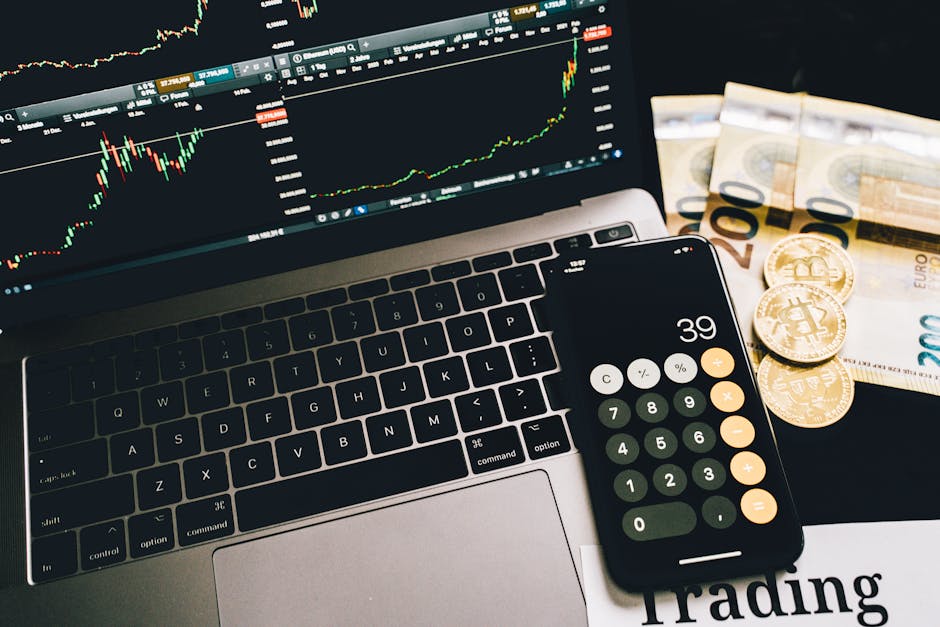
Clean chart formatting prevents misinterpretation. Always enable logarithmic scale for long-term trends – it normalizes percentage moves and prevents early price data from looking flat. Volume Profile (Visible Range) is superior to standard volume bars because it shows traded volume at specific price levels, highlighting high-activity zones. Combine it with the VWAP (Volume Weighted Average Price) as a dynamic support/resistance line. For short-term trades, use anchored VWAP from a major swing point.
Customizing Timeframes and Alerts
Avoid fixed timeframes like 1H or 4H alone. Instead, use multi-timeframe analysis with a ratio of 1:4:16 (e.g., 15min, 1H, 4H). Set price alerts at key Fibonacci retracement levels (0.382, 0.618) and round numbers. Most reliable sites allow you to overlay Bollinger Bands with ATR (Average True Range) – when the bands squeeze and ATR drops below its 20-period average, expect a breakout.
3. Liquidation Heatmaps and Funding Rates
For futures traders, a liquidation heatmap is indispensable. It clusters stop-loss levels of leveraged positions, acting as liquidity magnets. High liquidation density above current price suggests potential short squeezes. Pair this with the Funding Rate – if it stays negative for 48 hours, shorts are paying longs, and a reversal is likely. On a quality platform, you can filter by exchange (Binance, Bybit) and leverage tier. Ignoring these tools leads to getting stopped out by whale traps.
Open Interest (OI) changes validate trend strength. A rising price with falling OI signals trend exhaustion. Use the OI-Volume divergence tool to spot fakeouts before they happen. These formatting tools transform raw data into actionable setups.
4. Custom Screeners and Correlation Matrices
Stop manually flipping through coins. A reliable cryptocurrency site should let you build screeners filtering by RSI divergence, volume spike (3x above 20-day average), and market cap range. For portfolio hedging, check the ETH/BTC correlation matrix – when correlation drops below 0.5 for 30 days, altcoins may decouple. Always set your chart default to Heikin-Ashi candles for trend filtering; they smooth out noise and show clear momentum shifts. Mastering these formatting options saves hours of manual analysis.
FAQ:
What is the most reliable on-chain indicator for identifying bottoms?
The MVRV Z-Score combined with SOPR below 1. When both flash extreme fear, historical data shows strong reversal probabilities.
Why use logarithmic scale instead of linear?
Log scale shows percentage changes accurately over time. Linear scale distorts long-term trends, making early price moves look insignificant.
How do liquidation heatmaps improve trade entries?
They reveal where large stop-loss clusters sit. Price often moves to sweep these zones before reversing, giving you precise entry points.
What is the ideal multi-timeframe ratio for day trading?
Use 1:4:16 ratio – 15min for entry, 1H for trend, 4H for bias. This avoids conflicting signals from arbitrary timeframes.
Can funding rates predict sudden crashes?Extreme positive funding (above 0.1%) for 24+ hours indicates overheated longs. A sudden spike often precedes a correction or long squeeze.
Reviews
Marcus L.
I started using liquidation heatmaps after reading this. Caught a 12% BTC bounce last week. The indicator section saved me from bad entries.
Sofia K.
The section on volume profile changed my chart setup. Now I see exact support levels instead of guessing. Practical and to the point.
Jason T.
Finally understand why my stops kept getting hit. The correlation matrix tip helped me balance my altcoin portfolio. Solid advice.